
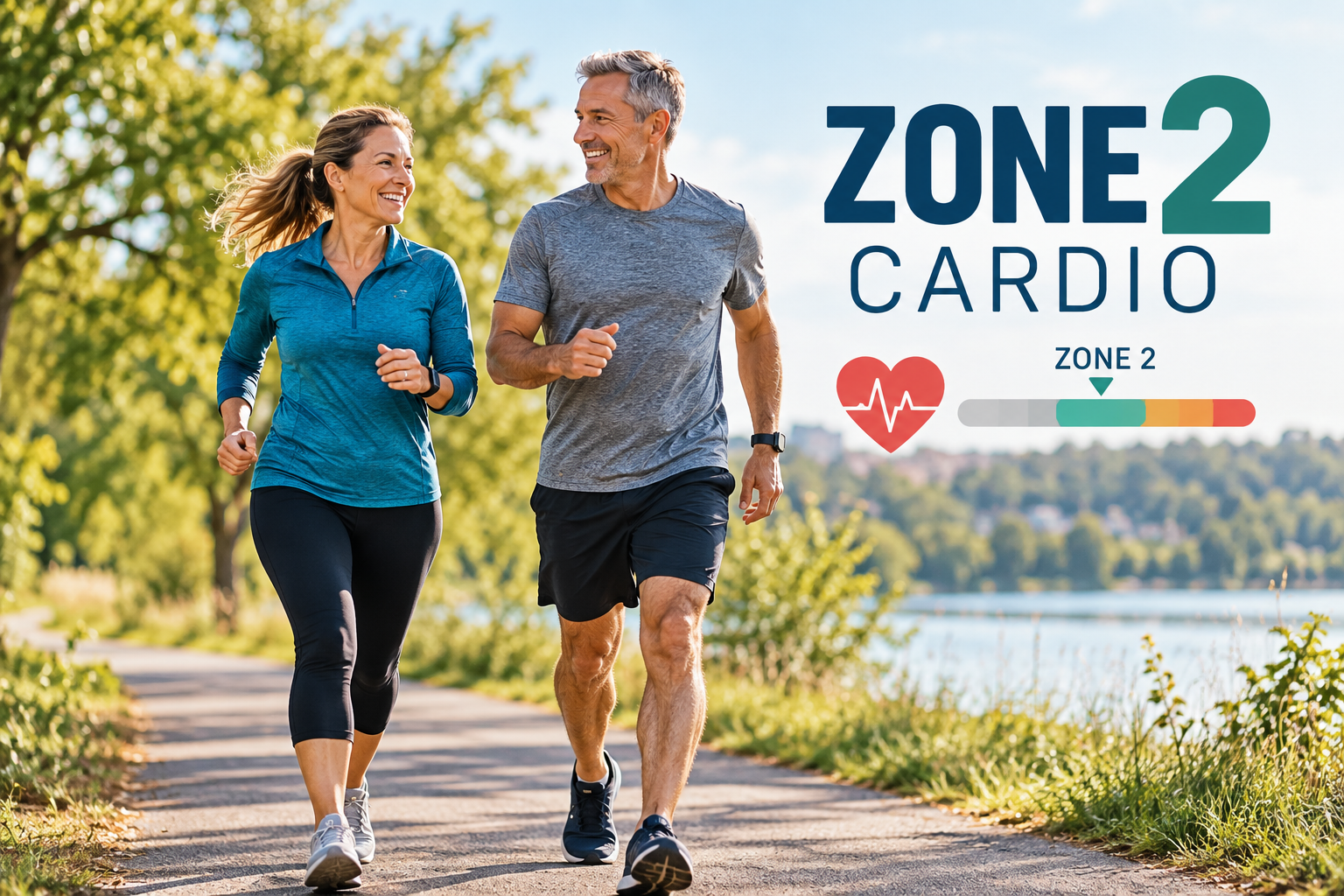
If you’ve paid attention to fitness and healthy-aging trends lately, you may have heard people talking about Zone 2 cardio.
The name makes it sound complicated. Do you need a heart-rate monitor? A special workout? Do you have to run?
Fortunately, Zone 2 cardio is actually pretty simple.
For many people, it means exercising at a comfortable but steady intensity—working hard enough to challenge your cardiovascular system, but not so hard that you’re gasping for air.
And you definitely don’t have to be an athlete to benefit.
Let’s take a closer look at what Zone 2 cardio is, why it has become so popular, and how you can incorporate it into your routine.
❤️ What Is Zone 2 Cardio?
Exercise intensity is often divided into different heart-rate or training “zones.”
Zone 2 is generally considered a relatively easy-to-moderate aerobic intensity.
During Zone 2 exercise:
✓ Your heart rate is elevated
✓ Your breathing is faster than at rest
✓ You feel like you’re exercising
✓ You can maintain the activity for an extended period
✓ You can still carry on a conversation
Think of it as a pace that’s challenging enough to be exercise but comfortable enough to sustain.
For many people, activities such as brisk walking, easy cycling, swimming, using an elliptical, or light jogging can fall into this range.
🗣️ The Talk Test: An Easy Way to Estimate Your Intensity
You don’t necessarily need an expensive fitness tracker to get an idea of whether you’re exercising at a moderate aerobic intensity.
One simple method is the talk test.
During an appropriately moderate workout, you should generally be able to speak in sentences, although you may notice that your breathing is faster.
If you can sing an entire song without much effort, you may not be working very hard.
If you’re so out of breath that you can only get out a few words at a time, you’re probably exercising at a higher intensity.
💡 SIMPLE RULE:
You should feel like you’re exercising, but you shouldn’t feel like you’re sprinting to the finish line.
🧮 What Should Your Heart Rate Be?
This is where things get a little more complicated.
You may see Zone 2 described using a percentage of your maximum heart rate, but there isn’t one perfect formula that works for everyone.
A commonly used rough estimate for maximum heart rate is:
220 – your age = estimated maximum heart rate
For example, for a 50-year-old:
220 – 50 = 170 beats per minute
Different training systems define Zone 2 somewhat differently, and medications, fitness level, genetics, and health conditions can all affect heart rate.
That’s why your smartwatch’s “Zone 2” may not perfectly match another person’s—or even another device’s—definition.
For most people simply trying to improve their health, combining heart-rate information with how the exercise feels and the talk test may be more practical than obsessing over an exact number.
🔥 Why Has Zone 2 Become So Popular?
One reason is that you can get meaningful exercise without feeling completely exhausted afterward.
Zone 2-style aerobic exercise can help support:
❤️ Cardiovascular fitness
🏃 Aerobic endurance
⚡ Your body’s ability to produce energy efficiently
🩸 Metabolic health
🚶 Stamina for everyday activities
🌿 Overall health and healthy aging
And because the intensity is relatively manageable, many people find it easier to perform consistently than very intense workouts.
👨🦳 Why Does Aerobic Fitness Matter After 40?
As we get older, maintaining fitness isn’t just about looking good.
It’s about continuing to do the things you want to do.
Walking through an airport, climbing stairs, mowing the lawn, traveling, hiking, playing with your kids or grandkids, and simply getting through a busy day all require some degree of cardiovascular endurance.
Maintaining aerobic fitness as you age can be an important part of staying active, capable, and independent.
The good news?
You don’t have to train like an endurance athlete to work on it.
🚶 Walking May Be All You Need to Get Started
This is one of the best things about moderate aerobic exercise.
For many people, brisk walking is an excellent starting point.
You might need to walk faster than your normal casual pace. You could also add hills or increase the incline on a treadmill.
Other options include:
🚴 Stationary or outdoor cycling
🏊 Swimming
🏃 Easy jogging
🚶 Incline treadmill walking
⭕ Elliptical training
🥾 Hiking
🚣 Rowing
The best exercise is often the one you can perform comfortably and consistently.
⏱️ How Long Should You Exercise?
You don’t necessarily need hour-long workouts.
General physical activity recommendations for adults include approximately 150 minutes of moderate-intensity aerobic activity per week, along with muscle-strengthening activity.
That could look like:
30 minutes × 5 days per week
But that isn’t the only way to do it.
You could also exercise for shorter periods throughout the week. Someone who is currently inactive might begin with just 10–15 minutes at a time and gradually build from there.
The goal isn’t perfection.
The goal is consistency.
🏋️ Don’t Forget About Strength Training
Zone 2 cardio may be getting a lot of attention, but aerobic exercise is only one piece of healthy aging.
As we get older, maintaining muscle and strength becomes increasingly important.
That’s why a well-rounded exercise routine should generally include both:
❤️ Aerobic exercise for cardiovascular fitness and endurance
AND
💪 Resistance training for muscle mass and strength
You don’t have to choose between cardio and weights.
They accomplish different things, and both can be valuable.
⚡ What About High-Intensity Exercise?
Higher-intensity exercise can also have benefits.
Zone 2 isn’t “better” simply because it’s currently popular.
Different exercise intensities challenge your body in different ways. Some people may benefit from a combination of easier aerobic exercise, resistance training, and occasional higher-intensity activity when appropriate.
Your age, current fitness level, medical history, injuries, and goals should all be considered when developing an exercise program.
😅 Should Every Workout Feel Hard?
Definitely not.
One common mistake people make when returning to exercise is assuming that every workout needs to leave them exhausted.
It doesn’t.
In fact, if every workout is extremely difficult, you may find it harder to recover and stay consistent.
A moderate workout that you can repeat week after week may ultimately be much more valuable than an extreme workout that leaves you sore for five days and makes you dread exercising again.
💡 HEALTHY AGING TIP:
Don’t judge a workout only by how tired you feel afterward. Consistency over months and years matters much more than destroying yourself during one workout.
🦵 What If Joint or Back Pain Makes Cardio Difficult?
This is where choosing the right activity becomes important.
Running isn’t your only option.
If walking or running bothers your knees, hips, or back, lower-impact activities such as cycling, swimming, an elliptical, or other forms of cardiovascular exercise may be more comfortable.
But persistent pain shouldn’t simply be ignored.
Pain can cause people to gradually reduce their activity. Less activity can lead to loss of strength and conditioning, which can make returning to exercise even more difficult.
Finding and addressing the reason you’re hurting may help you get back to the activities you enjoy.
🚦 How Should Beginners Start?
If you haven’t exercised regularly for a while, don’t worry about creating the “perfect” Zone 2 program.
Start simple.
For example:
Week 1: 10–15 minutes of brisk walking several days
Week 2: 15–20 minutes
Week 3: 20–25 minutes
Week 4: Work toward 30 minutes
You can gradually increase the duration or intensity as your fitness improves.
You don’t have to go from the couch to an athlete overnight.
🌿 The Bigger Picture
Zone 2 cardio isn’t a magic workout.
It’s simply one useful way to think about aerobic exercise.
Long-term health is built from multiple habits:
💪 Strength training
❤️ Regular cardiovascular exercise
🚶 Daily movement
🍗 Adequate nutrition and protein
😴 Quality sleep
⚖️ Maintaining a healthy body composition
📅 Consistency
You don’t need to do everything perfectly.
You need habits you can maintain.
✓ The Bottom Line
So, should you be doing Zone 2 cardio?
For many adults, moderate aerobic exercise can be an excellent part of a well-rounded fitness routine.
You don’t need expensive equipment.
You don’t necessarily need a heart-rate monitor.
And you certainly don’t need to become a marathon runner.
Walk. Bike. Swim. Use the elliptical. Find something you enjoy and can continue doing.
As we get older, the goal isn’t simply to exercise harder.
The goal is to remain strong, active, mobile, and independent for as long as possible.
🩺 Cedar Rapids Pain Associates
At Cedar Rapids Pain Associates, we believe movement and exercise are important parts of long-term health.
If back pain, joint pain, or an injury is preventing you from exercising or doing the activities you enjoy, our team offers a variety of treatment options designed to help address the source of your pain and improve function.
✓ No referral needed
✓ Appointments in days, not weeks
✓ All major insurances accepted
✓ All care performed in office – no additional facility fees
📞 319-294-0094
🌐 www.crpainfree.com