
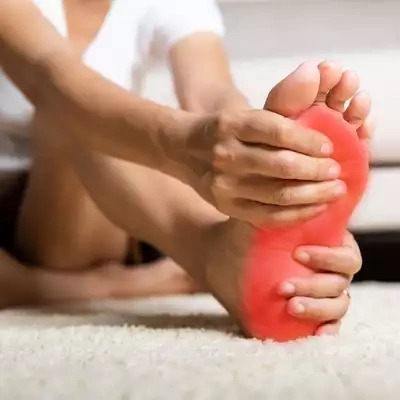
Do your first few steps in the morning hurt the most? Does your heel ache after standing, walking, or being on your feet all day?
You may be dealing with plantar fasciitis, one of the most common causes of heel pain.
Plantar fasciitis can make something as simple as getting out of bed, walking through the grocery store, exercising, or working on your feet uncomfortable. The good news is that many cases can be treated without surgery.
At Cedar Rapids Pain Associates, we offer multiple nonsurgical options for persistent heel and foot pain.
🔷 What Is Plantar Fasciitis?
The plantar fascia is a strong band of connective tissue that runs along the bottom of your foot from your heel toward your toes. It helps support the arch of your foot and absorbs stress while you walk and run.
When the plantar fascia becomes irritated or develops repetitive stress, pain can occur—most commonly near the heel.
This condition is known as plantar fasciitis.
💡 Did You Know?
Plantar fasciitis doesn’t only affect runners and athletes. It can affect anyone, particularly people who spend long periods standing or walking.
👣 What Does Plantar Fasciitis Feel Like?
The classic symptom is pain near the bottom of the heel.
Common symptoms include:
- ✓ Sharp or stabbing heel pain
- ✓ Pain with the first steps after getting out of bed
- ✓ Heel pain after sitting for a long period
- ✓ Pain after prolonged standing or walking
- ✓ Tenderness on the bottom of the heel
- ✓ Pain that improves after moving around but returns later
- ✓ Increased pain after exercise or activity
Symptoms can occur in one or both feet.
🌅 Why Does My Heel Hurt So Much in the Morning?
This is one of the most recognizable symptoms of plantar fasciitis.
While you’re sleeping, the foot remains relatively inactive for several hours. When you stand and take those first few steps, the plantar fascia is suddenly placed under tension again.
That can produce the characteristic sharp heel pain when getting out of bed.
Symptoms may decrease as you begin walking, only to return after prolonged standing or activity.
🔍 What Causes Plantar Fasciitis?
Plantar fasciitis usually develops from repeated stress placed on the plantar fascia rather than one specific injury.
Factors that may contribute include:
- Spending long periods standing or walking
- Running or high-impact exercise
- Suddenly increasing your activity level
- Tight calf muscles
- Limited ankle flexibility
- Foot mechanics that place additional stress on the plantar fascia
- Wearing unsupportive footwear
- Walking or working frequently on hard surfaces
- Excess body weight
- Age-related changes in the foot
Sometimes several factors contribute at the same time.
👟 Can Your Shoes Cause Plantar Fasciitis?
Footwear may contribute to heel pain, especially if shoes provide inadequate support or are worn out.
People with plantar fasciitis may benefit from shoes that provide appropriate support and cushioning.
Replacing worn-out athletic shoes and avoiding long periods in poorly supportive footwear may also help reduce stress on the foot.
🏃 Can Plantar Fasciitis Go Away on Its Own?
Mild plantar fasciitis may improve with activity modification, stretching, supportive footwear, and time.
However, plantar fasciitis can sometimes become persistent or chronic, particularly when the underlying factors contributing to the problem aren’t addressed.
If you’ve been trying to manage heel pain yourself and it keeps coming back, it may be time to have it evaluated.
🔷 How Is Plantar Fasciitis Treated?
Treatment depends on how long you’ve had symptoms, their severity, your activity level, and what previous treatments you’ve tried.
At Cedar Rapids Pain Associates, treatment plans are individualized rather than taking a one-size-fits-all approach.
Options may include:
🧘 Stretching & Home Exercises
Improving flexibility of the calf muscles, Achilles tendon, and plantar fascia can be an important part of treatment.
Your provider may recommend specific stretches and exercises to perform regularly at home.
🏃 Physical Therapy
Physical therapy may help address factors contributing to plantar fasciitis through:
- Stretching
- Strengthening
- Mobility exercises
- Improving ankle flexibility
- Balance and stability exercises
- Activity modifications
The goal is not only to decrease symptoms but also to improve how the foot and ankle function.
👟 Supportive Footwear & Orthotics
Appropriate footwear or inserts may help support the foot and reduce stress on the plantar fascia.
⚡ Shockwave Therapy for Plantar Fasciitis
For persistent or stubborn plantar fasciitis, Extracorporeal Shockwave Therapy may be another nonsurgical option.
Shockwave Therapy uses targeted acoustic waves applied directly to the painful area.
It is commonly used for chronic tendon and soft-tissue conditions, including plantar fasciitis.
Benefits of Shockwave Therapy include:
- ✓ Nonsurgical
- ✓ No injections
- ✓ Performed in the office
- ✓ Short treatment sessions
- ✓ Minimal downtime
- ✓ Patients can typically continue normal daily activities
Shockwave Therapy can be particularly appealing for people who have already tried stretching, footwear changes, or other conservative treatments without enough improvement.
🔴 MLS® Robotic Laser Therapy
MLS Laser Therapy is another noninvasive treatment option available at Cedar Rapids Pain Associates.
MLS Laser Therapy uses specific wavelengths of light to influence cellular activity and may help reduce pain and inflammation in irritated tissues.
Benefits include:
- ✓ No needles
- ✓ No incisions
- ✓ No medications
- ✓ Comfortable treatments
- ✓ No downtime
- ✓ Performed right in our office
MLS Laser Therapy may be incorporated into a comprehensive treatment program alongside stretching, physical therapy, or other treatments.
🩸 PRP for Chronic Plantar Fasciitis
For plantar fasciitis that has persisted despite conservative treatment, Platelet-Rich Plasma (PRP) may be considered.
PRP therapy uses a concentrated preparation of platelets obtained from the patient’s own blood.
A small amount of blood is collected and processed to concentrate the platelets and growth factors. The PRP is then injected into the targeted area.
PRP is used in regenerative medicine for a variety of tendon, ligament, and soft-tissue conditions.
🦴 BMAC (Stem Cell Therapy)
Bone Marrow Aspirate Concentrate (BMAC), commonly referred to as stem cell therapy, is another regenerative medicine treatment available at Cedar Rapids Pain Associates.
BMAC is created from a patient’s own bone marrow and contains concentrated cells and growth factors.
For certain persistent orthopedic and soft-tissue conditions, BMAC may be considered as part of an individualized regenerative treatment plan.
Your provider can help determine whether PRP, BMAC, or another treatment approach is most appropriate based on your condition and treatment history.
💉 What About Injections?
Depending on the severity and duration of symptoms, injections may sometimes be considered for plantar fasciitis.
Different types of injections have different goals, benefits, and potential risks. Your provider can discuss whether an injection is appropriate based on your individual condition.
🚩 When Should You See a Doctor for Heel Pain?
Consider having your heel pain evaluated if:
- ✓ Pain has lasted several weeks
- ✓ Your heel hurts nearly every morning
- ✓ Pain keeps returning
- ✓ Walking or standing has become uncomfortable
- ✓ Heel pain is affecting work or exercise
- ✓ You’ve stopped activities because of the pain
- ✓ Stretching and footwear changes haven’t helped
- ✓ Symptoms are getting worse instead of better
Persistent heel pain doesn’t necessarily mean you’ll need surgery. There are several nonsurgical treatment options available.
❓ Is All Heel Pain Plantar Fasciitis?
No.
Although plantar fasciitis is a common cause of heel pain, other conditions can produce similar symptoms.
Heel or foot pain may sometimes be related to:
- Achilles tendon problems
- Arthritis
- Stress injuries
- Nerve irritation
- Other tendon or ligament conditions
- Referred pain from the lower back
That’s why an accurate diagnosis is important—especially when symptoms aren’t improving as expected.
🦶 Stop Letting Heel Pain Control Your Day
If you’re planning your first few steps every morning because you know they’re going to hurt, it’s time to find out what’s causing the pain.
At Cedar Rapids Pain Associates, we offer multiple nonsurgical approaches for plantar fasciitis and other causes of foot and heel pain.
Depending on your individual condition, treatment may include:
Physical Therapy • Shockwave Therapy • MLS Laser Therapy • PRP • BMAC (Stem Cell Therapy) • Injections • Other Conservative Treatments
Our goal is to identify what’s causing your heel pain and develop a treatment plan designed to help you move more comfortably and return to the activities you enjoy.
📅 Ready to Take the First Step Toward Less Heel Pain?
Schedule an evaluation with Cedar Rapids Pain Associates.
☎️ 319-294-0094
🌐 crpainfree.com
⭐ Appointments available in days, not weeks.
✓ No referral needed!